Blender types
Blender Types Explained
Six types of blender cover almost everything you will find in Bangladeshi shops and online stores. Here is how they differ and which kitchens they suit.

“Blender” covers a surprisingly wide range of machines. Choosing the right type first makes comparing individual models far easier — and keeps you from paying for power or features you will never use.
Personal blender
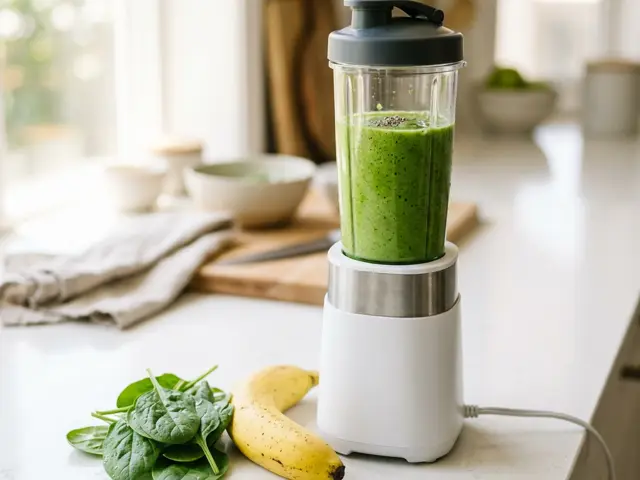
A compact motor base with a single-serve bottle that doubles as the drinking cup. You blend, twist on a lid and go.
Strengths
- Small, light and easy to store
- Very quick to clean
- Affordable
Limitations
- Small capacity — one or two servings
- Not built for pastes, dry grinding or much ice
- Motors are usually short-duty
Best for: students, single professionals and anyone who mainly wants a morning smoothie or protein shake.
Countertop blender
The familiar full-size blender with a 1.2–2 L jar, multiple speeds and often one or two extra jars for chutney or dry grinding.
Strengths
- Versatile for drinks, soups and sauces
- Family-sized batches
- Wide choice at most budgets
Limitations
- Takes counter space
- The main jar is not ideal for dry grinding
- Mid-range motors can strain on thick pastes
Best for: most families who make juice, lassi, soups and the occasional chutney.
Heavy-duty blender
Also called high-performance or commercial blenders. Motors of 1,000 W and more, rugged jars and blades, and often a tamper to push thick mixtures down.
Strengths
- Handles ice, frozen fruit and nut butters
- Very smooth results
- Built for frequent, long use
Limitations
- Expensive
- Loud and large
- More power than many homes need
Best for: large households, serious home cooks, and juice bars, cafés or home-based food businesses.
Portable blender
A small rechargeable blender, usually charged by USB, with a bottle-shaped jar.
Strengths
- Use anywhere — office, gym, travel
- No socket needed while blending
- Very compact
Limitations
- Low power — soft fruit and powders only
- Battery life limits batches
- Small capacity
Best for: quick shakes on the move. Not a replacement for a kitchen blender.
Smoothie blender
A blender whose jar and blade shape are tuned to pull thick, frozen mixtures down into the blades, sometimes with a smoothie preset.
Strengths
- Smoother texture with frozen fruit
- Often includes both a jar and travel cups
- Simple controls
Limitations
- Less versatile for cooking
- Usually no dry-grinding jar
Best for: households that make smoothies, shakes and frozen drinks most days.
Multi-purpose blender
A blender-grinder combo with a main blending jar plus smaller wet and dry jars — sometimes a juicer attachment too. Very common in Bangladesh.
Strengths
- One appliance for most kitchen jobs
- Dedicated jars for wet and dry grinding
- Good value in the mid-range
Limitations
- More parts to clean and store
- Jack of all trades: dedicated grinders can be stronger at masala
Best for: families who cook daily and want drinks, pastes and spice grinding from one machine.
Blender types at a glance
| Type | Typical capacity | Typical power | Main strength |
|---|---|---|---|
| Personal | 0.3–0.7 L | 250–400 W | Convenience |
| Countertop | 1.2–2 L | 400–800 W | Versatility |
| Heavy-duty | 1.5–2.5 L | 1,000–2,000 W | Power |
| Portable | 0.3–0.5 L | Battery | Mobility |
| Smoothie | 0.6–1.5 L | 300–700 W | Frozen drinks |
| Multi-purpose | Multiple jars | 500–1,000 W | All-round cooking |
Still undecided? See which blender suits your home, or check the typical price for each type.
Frequently asked questions
Can I grind dry spices in a regular blender jar?
Small amounts of soft spices may work, but the tall main jar is not designed for dry grinding — spices tend to fly up the sides instead of meeting the blades. Use the small dry or chutney jar if your blender has one, or a mixer grinder for daily masala.
Can I blend hot liquids such as soup or dal?
Let hot food cool for a few minutes first, fill the jar no more than about half way, and leave the lid’s centre cap slightly open (covered with a folded towel) so steam can escape. Trapped steam can push the lid off. Always follow your manual — some jars are not rated for hot liquids.